
Reduce Fatigue With Spring Balancers and a Retracting Tool Holder

For example, in assembly line work in industry, constant movements of lifting, setting, and moving heavy tools cause fatigue, inefficiency, and even industrial accidents. This is even much worse when air-operated tools and fastening machinery are used by the workers.
Selection of the right spring balancer and the appropriate tool holder ensures efficiency and ergonomics in handling tools, keeps the place of work clean, reduces fatigue, and makes assembly in the industry easy and efficient.
Why Does Tool Handling Become a Workplace Challenge?
The tools used in manufacturing, automobile assembly, welding, and maintenance operations could be heavy and bulky to handle. Holding them up in the process takes its toll on the operator and reduces accuracy in performing repetitive tasks.
Disorganized tool arrangement could also lead to inefficiency in that workers constantly have to locate and position the equipment. The tool support system is a viable solution to this problem.
How Do Spring Balancers Improve Operator Efficiency?
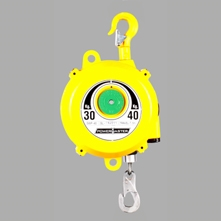
Spring balancers have tools suspended via a wire and a spring arrangement that cancels out most of the weight of the tool. The operator can then pull the tool into position and release it after the work is done, and it is returned to its original position.
Spring balancers have numerous advantages in terms of reducing fatigue in holding the tool in place, increasing access, and improving workflow. They are ideal in assembly stations, welding applications, and industrial production where there is repeated use of tools.
When choosing a spring balancer, you need to take into account the weight of the tool, its length of cable travel, frequency of use, and method of mounting. Load matching is critical for its effective performance.
When Should You Use a Retracting Tool Holder?
The retracting tool holder enables commonly used tools to be kept close by while also putting them back into their rightful place once they have been used. This depends on its construction and could involve retractable cables, springs, or any other method for holding the tools.
Such holders will make it easy to avoid having things in disarray, save time when looking for the equipment, and ensure the placement of the same is always consistent. It is effective for lightweight tools and some equipment.
Before installing such a holder, one needs to ascertain its load capacity, cable length, installation specifications, and whether it is compatible with the tool being installed.
Weigh and assess the mobility needs of the tools in order to decide on the support systems.
Conclusion
Selecting the appropriate tool support equipment may lower stress on the worker, enhance accessibility, and organize the industrial environment. This is possible if the right equipment is chosen based on the tool weight and operating conditions.
The Spring Balancer has different spring balancers that are meant to offset hand tools and help workers to operate them easily. The company’s product line includes different loads, drum locking on applicable models, and other specifications. This list of products may find applications in automotive manufacturing, welding, and assembly industries. Businesses should look into the specifications to find the equipment that would suit their requirements.