
How to Select The Best Spring Balance Tool Model?

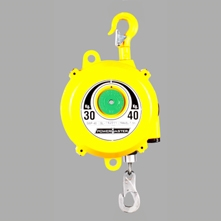
In the manufacturing and industrial industry it is very important to understand the needs of balancing tools. Spring balance tools, also known as tool balancers are the most crucial component of the manufacturing industry.
These tools are designed to lessen the physical force and are made to replace the hand tools while managing your industrial manufacturing without any interruption.
Dive through this guide to understand how you need to choose the right model for your needs for efficient and long-lasting performance.
Understanding the Primary Types of Tool Balancers
It is crucial to differentiate between the two primary types of spring balancers to choose the right one for your workstation.
Retractor Tool Balancers
Made to return the tool to its home position after it has been released. Throughout operation, the operator must pull against the constant upward stress exerted by the internal spring. These are Ideal for easy repetitive activities and lightweight items (usually weighing less than 10 lbs) that must be removed from the workspace right away after usage.
Zero Gravity Tool balancers
These tools have a conical, tapered drum that maintains a constant tension throughout the cable stroke. The tool remains still at whatever height the user left it, and there is no upward pull. These are perfect for high-precision jobs requiring the tool to float without resistance and heavy-duty applications (up to 200 kg/440 lbs).
Guide to Load Calculation while Buying Tool Balancers
It is very important to know the overall weight to avoid frequent error while choosing the tool balancers. A balancer’s capacity range must be considered before selecting it, and the load must fall within that range. Determine the base tool’s weight while also including these weights:
- Cables and hoses that are either electric or pneumatic.
- Heavy attachments, bits, or socket sets.
- The substance or fluid (if relevant) within the gadget.
- Choose a balancer model whose total tool weight falls between the middle and upper third of its capacity range.
Evaluating Cable Reach and Travel
The worker’s range of motion is determined by the stroke or cable length. The workers might get frustrated if the cable is too short and the tool hangs too low.
- Understand the vertical stroke by measuring the distance between the tool’s lowest point of usage and the peak point, such as the ceiling or tool rail.
- The tallest and lowest operators’ heights should be considered. The dead zone is the internal boundary of the cable that must be avoided by the cable drum over its whole range of motion.
- Instead of depending just on the balancer’s internal cable, add a supplementary extension chain or wire to lower the balancer body to an accessible height if the ceiling is abnormally high.
Conclusion
A balance between load accuracy, safety features, and environmental appropriateness must be considered while choosing the right spring balance tool. You may design a workstation that is both ergonomically sound and productive by giving priority to a tool balancer model that fits the precise weight of your assembly and making sure it has the required safety locks.
Making the correct choice will ultimately result in a safer and more effective industrial setting, whether you choose a basic retractor or a high-precision zero-gravity tool balancer. Looking for the right tool balancers for your industry? Visit Spring Balancers official website to find the best product according to your needs.