
Data Lake vs Delta Lake: Understanding Delta Lake, Databricks Delta Lake, and Unity Catalog

In today’s data-driven world, organizations are constantly dealing with massive volumes of structured and unstructured data. To manage, analyze, and derive insights from this data efficiently, modern data architectures have evolved rapidly. Among the most discussed concepts in this space are Data Lake vs Delta Lake, what is a Delta Lake, Databricks Delta Lake, and Databricks Unity Catalog. Understanding how these technologies work together is essential for enterprises aiming to build scalable, secure, and reliable data platforms.
This guest post explores the differences between a traditional data lake and a delta lake, explains what a Delta Lake is, highlights the role of Databricks Delta Lake, and introduces Databricks Unity Catalog for data governance.
What Is a Data Lake?
A data lake is a centralized repository designed to store large volumes of raw data in its native format. This data can be structured, semi-structured, or unstructured and is typically ingested from multiple sources such as applications, IoT devices, logs, and databases. Data lakes are popular because of their flexibility, low storage cost, and ability to scale easily.
However, traditional data lakes often face challenges such as poor data quality, lack of schema enforcement, data duplication, and difficulties in maintaining consistency. Over time, these issues can turn a data lake into what is commonly known as a “data swamp,” where data becomes unreliable and hard to use.
Data Lake vs Delta Lake: Key Differences
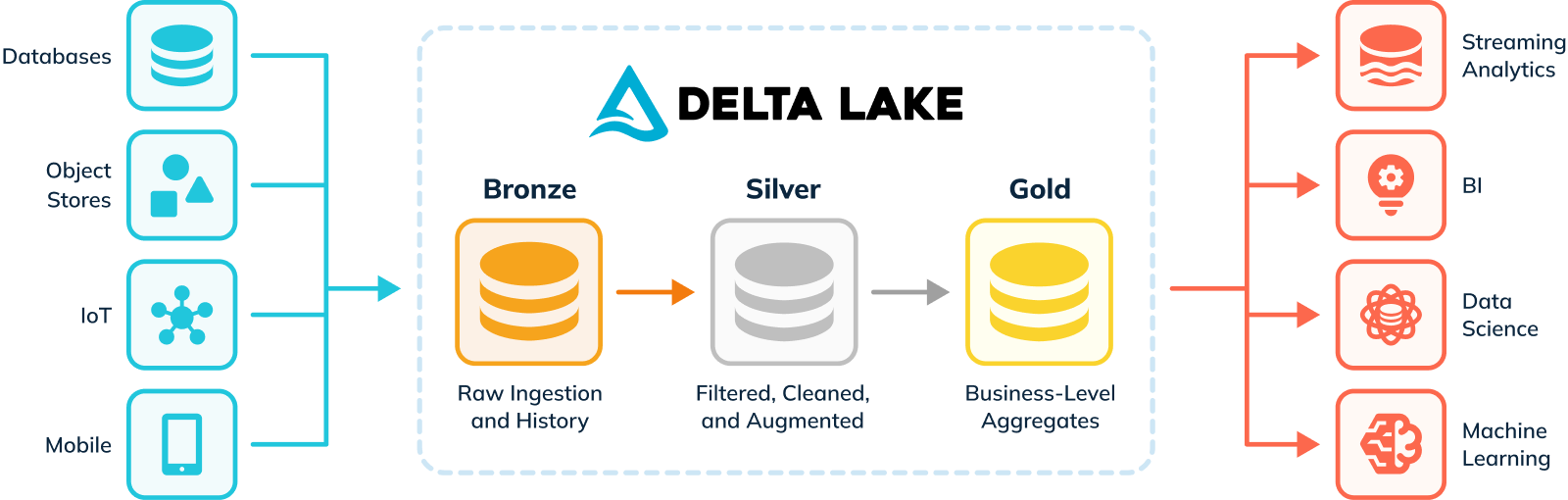
The debate around data lake vs delta lake arises from the need to overcome the limitations of traditional data lakes. While a data lake focuses primarily on storage, a delta lake adds a transactional layer on top of the data lake architecture.
A delta lake introduces ACID (Atomicity, Consistency, Isolation, Durability) transactions, schema enforcement, and time travel capabilities. This means data engineers and analysts can trust the data, manage updates and deletes efficiently, and track changes over time. In contrast, a standard data lake lacks these features, making data reliability a significant concern.
In summary, the main difference in the data lake vs delta lake comparison is that a delta lake enhances a data lake with reliability, governance, and performance optimization while retaining scalability and flexibility.
What Is a Delta Lake?
So, what is a Delta Lake exactly? A Delta Lake is an open-source storage layer that brings reliability to data lakes. It sits on top of cloud storage systems such as Amazon S3, Azure Data Lake Storage, or Google Cloud Storage.
Delta Lake enables features like ACID transactions, scalable metadata handling, schema evolution, and unified batch and streaming data processing. These capabilities allow organizations to build robust data pipelines that support advanced analytics, machine learning, and real-time reporting.
By implementing Delta Lake, teams can reduce data errors, simplify pipeline maintenance, and improve overall data quality across the organization.
Databricks Delta Lake Explained
Databricks Delta Lake is the most widely adopted implementation of Delta Lake and is tightly integrated with the Databricks Lakehouse Platform. Databricks Delta Lake allows organizations to combine the best features of data lakes and data warehouses into a single architecture known as the Lakehouse.
With Databricks Delta Lake, users benefit from optimized performance, scalable processing using Apache Spark, and built-in support for streaming and batch workloads. It also enables efficient data versioning and rollback through time travel, making debugging and auditing much easier.
Another key advantage of Databricks Delta Lake is its support for collaborative data engineering and analytics teams. Multiple users can work on the same datasets simultaneously without compromising data integrity.
Databricks Unity Catalog: Governance at Scale
As data platforms grow, managing security, compliance, and governance becomes increasingly complex. This is where Databricks Unity Catalog plays a critical role. Databricks Unity Catalog is a centralized governance solution designed to manage data access, lineage, and auditing across the entire Lakehouse.
Unity Catalog provides fine-grained access control for tables, views, files, and machine learning models. It ensures that the right users have access to the right data while maintaining compliance with regulatory requirements. Additionally, Unity Catalog offers data lineage tracking, allowing organizations to understand how data flows across systems and transformations.
When combined with Databricks Delta Lake, Unity Catalog enables a secure and governed data environment without sacrificing agility or performance.
How These Technologies Work Together
In a modern data architecture, a traditional data lake serves as the foundation for data storage. Delta Lake enhances this foundation by adding transactional reliability and performance optimizations. Databricks Delta Lake further simplifies implementation by providing a fully managed, scalable Lakehouse platform. Finally, Databricks Unity Catalog ensures consistent governance, security, and visibility across all data assets.
Together, these technologies help organizations move beyond basic data storage toward a unified analytics platform that supports business intelligence, advanced analytics, and AI initiatives.
Conclusion
Understanding data lake vs delta lake, what is a Delta Lake, Databricks Delta Lake, and Databricks Unity Catalog is crucial for organizations aiming to modernize their data platforms. While traditional data lakes offer flexibility and scalability, Delta Lake addresses their reliability and governance challenges. Databricks Delta Lake provides a powerful Lakehouse architecture, and Unity Catalog ensures secure, compliant, and well-governed data access.
By adopting these technologies, enterprises can build future-ready data platforms that deliver trusted insights, faster analytics, and better decision-making.