
Nonfiction Books That Challenge Thinking and Expand Perspectives

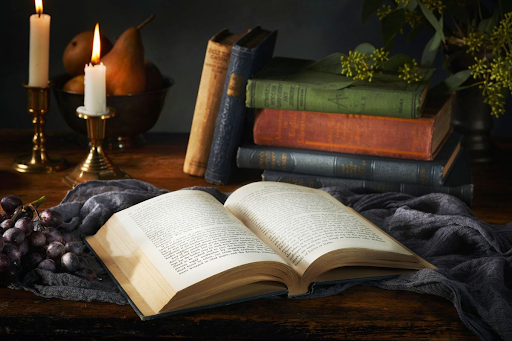
Some books entertain. Others quietly rearrange the way a person sees the world. You finish a chapter, look up, and realise that something you once took for granted no longer feels quite so certain. That is the special power of good non-fiction. If you are searching for non-fiction books to read that do more than fill a shelf, the right title can sharpen your judgment, stretch your empathy, and leave you asking better questions than the ones you started with.
Why Non-Fiction Deserves a Place on Every Reader’s Table
Fiction lets us live many lives. Non-fiction shows us how the world actually works: how minds make decisions, how societies rise and fall, how ideas travel, and how ordinary people change history. The best of these books do not simply hand over facts. They invite readers to argue, doubt, and reconsider. A well-written work of non-fiction is less like a lecture and more like a conversation with someone who has spent years thinking deeply about a single subject and is generous enough to share it.
Books That Change How We Think About Thinking
Few subjects are as humbling as the human mind. Thinking, Fast and Slow by Daniel Kahneman explores the two modes our brains use to make decisions: one quick and intuitive, the other slow and deliberate. Readers often come away startled by how often instinct misleads us, and how confident we can feel while being wrong.
Another eye-opener is Factfulness by Hans Rosling. Through data and warm storytelling, Rosling shows that the world is in many ways better than we assume, and that our dramatic instincts often distort what we see. It is a hopeful book, but also a disciplined one, teaching readers to check their assumptions before drawing conclusions.
Big-Picture Histories That Zoom Out
Some books ask us to step back and look at the human story in full. Sapiens by Yuval Noah Harari traces how our species moved from small foraging groups to global civilisations, arguing that shared stories, such as money, nations, and laws, hold societies together. Whether one agrees with every claim or not, the book is a wonderful provocation.
In Guns, Germs, and Steel, Jared Diamond asks why some societies gained power and technology earlier than others. His answer looks to geography, agriculture, and disease rather than any inherent difference between peoples. It is a demanding read, but a rewarding one for anyone curious about how the modern world took shape.
Looking Closer to Home: Indian History Books Worth Your Time
To understand the present, we have to understand the past that shaped it. Among the most valuable Indian history books are those that help readers see the subcontinent not as a single story, but as a rich tapestry of many voices.
- The Discovery of India: The Discovery of India by Jawaharlal Nehru is a reflective sweep through the country’s civilizations, philosophies, and cultural layers, written during the author’s imprisonment.
- India After Gandhi: India After Gandhi by Ramachandra Guha follows the world’s largest democracy from independence onward, exploring how a diverse and often doubted nation held together.
- The Wonder That Was India: The Wonder That Was India by A. L. Basham offers a classic portrait of ancient Indian society, art, religion, and daily life.
- An Era of Darkness: An Era of Darkness by Shashi Tharoor examines the colonial period and its lasting consequences, prompting debate and reflection.
Reading across these works is especially rewarding. Different authors emphasize different themes, and the tension between them teaches readers to think critically instead of accepting a single narrative.
Ideas That Confront Society Head-On
Some nonfiction books to read challenge not only how we think but how we live together. Annihilation of Caste by B. R. Ambedkar remains a powerful and uncomfortable text, examining social hierarchy with sharp logic and moral urgency. It reminds readers that questioning long-held structures is often the first step toward meaningful change.
Books like these may unsettle, but that discomfort is part of their value. A reader who engages honestly with challenging ideas becomes more thoughtful, more empathetic, and better prepared for real conversations about the society around them.
Science and Medicine Told as Human Stories
Science writing at its best feels like a detective story. Siddhartha Mukherjee’s The Emperor of All Maladies is a biography of cancer, tracing centuries of discovery, failure, and courage. It is scientific, historical, and deeply human all at once. Such books make complex subjects approachable. They show that research is not just charts and laboratories, but people driven by curiosity, stubbornness, and hope.
How to Read Non-Fiction So It Sticks
Reading challenging books is a skill, and a few habits can help:
- Start with a question: Ask yourself what you hope to learn before opening the first page.
- Read actively: Underline ideas that surprise you and jot down disagreements in the margins.
- Pair opposing views: Follow one author with another who sees the same subject differently.
- Take your time: Deep ideas need room to settle. One chapter a day is still progress.
- Talk about it: Explaining a book to a friend is one of the best ways to understand it.
Conclusion
Books that challenge our thinking do not always give comfortable answers, but they give something better: perspective. Whether exploring the human mind, global history, or society itself, these works remind us that understanding grows when we are willing to question. Indian history books can also open new ways of looking at the people, cultures, events, and ideas that have shaped the country over time. Keep reading widely, stay curious, and let every good book leave you a little more thoughtful than before.
Beetle Book Shop is an online bookstore offering Kannada books, competitive exam books, and works by celebrated Kannada authors. They bring readers a curated collection that honours language, culture, and heritage, making it easier for book lovers to discover meaningful reads and support a thriving reading community.